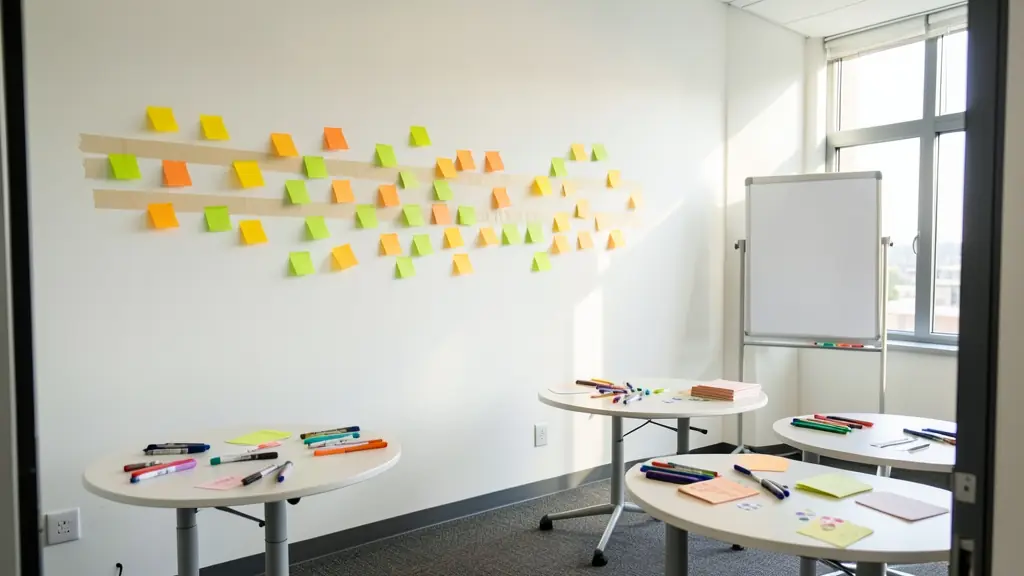
A workshop facilitator turns a room full of opinions into something you can act on. Workshops are working sessions: the group maps a problem, generates options, weighs them and agrees what happens next. They suit project kick-offs, process redesign, solving a recurring problem, and consulting stakeholders or a community before a decision. The facilitator designs each step to suit the people in the room and writes up what was agreed. Describe the problem and the group, and we pass your request to independent workshop facilitators near you, who quote you directly.
Workshops that facilitators are often asked to run
- Problem-solving workshops on a recurring issue: late deliveries, high turnover, a broken handover
- Project and planning workshops to agree scope, roles and a timeline
- Process design: mapping how work flows now and how it should flow
- Stakeholder and community workshops where several groups must be heard before a decision
- Idea generation for a new service, product or programme
For longer-term direction, see strategy sessions.
Designing the process
The design follows the outcome. A typical workshop moves from opening up (everyone's view on the table) to narrowing down (grouping, testing, choosing) to commitment (actions, owners and dates). Facilitators pick methods to suit: silent brainstorming on sticky notes so the senior voices don't dominate, breakout groups of five to eight, a World Café for wider input, Open Space when participants should set the agenda, and dot voting to show where the group leans. Side issues go to a parking lot so they are recorded without hijacking the day.
Stakeholder and community workshops
When residents, officials, farmers or several departments share a room, the facilitator must be seen as neutral and must plan for language, literacy and power. That can mean interpretation, picture-based exercises, separate sessions for groups who won't speak freely together, and a venue people can reach by taxi. Ask how the facilitator will record what each group said, so the write-up is fair. For a tense formal meeting, a meeting facilitator may fit better.
The write-up is the product
Ask what you will receive afterwards: photographs of the flip charts, a typed summary, or a full report with the decisions, an action plan and the issues still open. A good write-up arrives within days, while the energy is still there. Some clients add a graphic recorder so the outcome is one picture people remember.
Agree before the day who receives the report and who chases the actions. A workshop that produces a neat action plan nobody opens again has wasted a day of everyone's time. Many facilitators suggest a short check-in a month later, in person or on a video call, to see which actions have moved and which are stuck. If the same problem keeps returning, that check-in often shows why: the owner had no budget, or the decision needed someone who was not in the room.
What to include in your brief
- The problem or decision the workshop must settle
- Who will attend and how many
- Languages spoken in the group
- Date, length and venue
- What write-up you want afterwards
Workshop Facilitators for business, government and communities
- Companies and head offices: process redesign, project kick-offs and cross-team workshops on a problem nobody owns
- Government departments and municipalities: public participation and stakeholder workshops, and departmental workshops on service delivery
- Schools, colleges and universities: school improvement workshops with staff, governing bodies and parents
- NPOs, churches and community groups: community needs workshops, NPO programme design and partner planning sessions
- Small and family businesses: a workshop to fix a recurring customer problem or plan a new product with the team
- Mines, plants, factories and farms: production and safety improvement workshops with supervisors and shift teams
- Event organisers and associations: workshop tracks and breakout sessions inside a conference programme
- Training and skills development providers: curriculum and programme design workshops with subject experts and clients
Frequently asked questions
How long should a workshop be?
How many people can one workshop facilitator handle?
What should we prepare before the workshop?
Do you provide the facilitators yourselves?
Workshop Facilitators by province and city
- Johannesburg
- Pretoria
- Centurion
- Midrand
- Sandton
- Randburg
- Roodepoort
- Krugersdorp
- Randfontein
- Germiston
- Boksburg
- Benoni
- Kempton Park
- Alberton
- Vanderbijlpark
- Vereeniging
- Durban
- Pinetown
- Pietermaritzburg
- Richards Bay
- Newcastle
- Ladysmith
- Gqeberha (Port Elizabeth)
- East London
- Kariega (Uitenhage)
- Mthatha
- Cape Town
- Bellville
- Paarl
- Stellenbosch
- George
- Worcester
- eMalahleni (Witbank)
- Middelburg
- Secunda
- Mbombela (Nelspruit)
- Rustenburg
- Brits
- Klerksdorp
- Potchefstroom
- Mahikeng
- Polokwane
- Tzaneen
- Kimberley
- Upington
- Bloemfontein
- Welkom
- Sasolburg