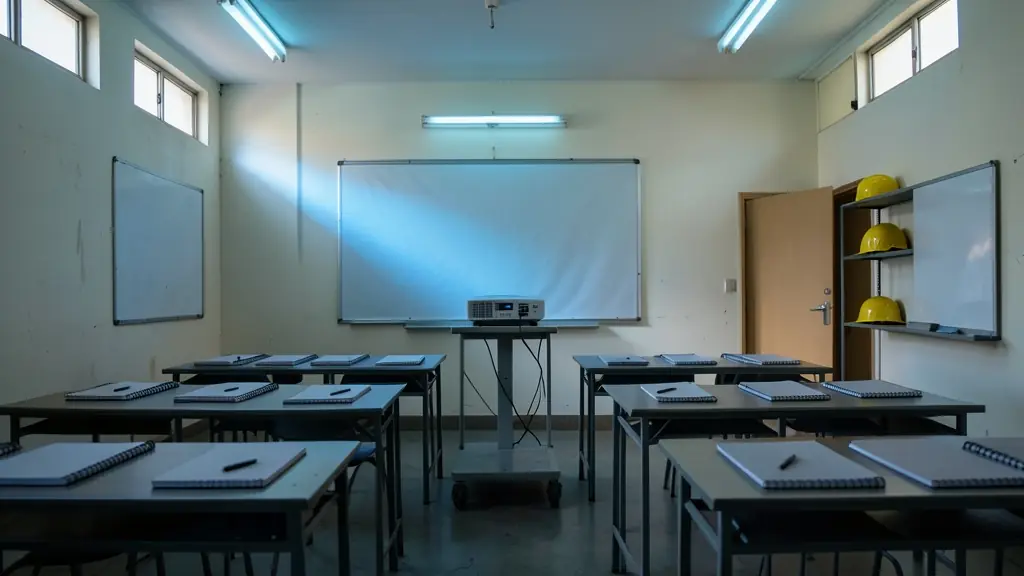
Training and facilitation overlap, but training has a different job: people must leave able to do something they could not do before. Training facilitators deliver induction, compliance, product, systems, customer service and safety courses, either in-house at your premises or at a venue. A good one mixes short inputs with practice and checks that the learning has landed. Tell us the topic, how many learners and where, and we pass your request to independent trainers and training providers in your area, who quote you directly at no cost to you.
What training facilitators deliver
- Induction for new staff: policies, systems, the site and who does what
- Compliance topics such as health and safety, POPIA awareness or a new internal procedure
- Product and systems training when a new range or software goes live
- Toolbox and safety talks on mines, farms and construction sites
- Soft skills such as customer service and communication, and supervisor and leadership programmes
Onsite or at a venue
Training at your premises saves travel and lets the trainer use your own equipment and examples, but people get pulled out for "just one call". A venue keeps learners focused and suits groups from several branches. If you train onsite, check the room: enough tables for workbooks, a screen or projector, a flip chart and backup power. For shift workers, ask whether the trainer can repeat the session across shifts on the same day.
The materials behind a course
A well-run course rests on three documents: a facilitator guide with timings and activities, a learner guide or workbook people take away, and an assessment to check what was learnt. For an accredited course there is also a portfolio of evidence. Ask whether the trainer brings existing material, adapts it to your business or writes it from scratch, because custom training materials take design days and are usually quoted separately.
Group size and how trainers quote
Most trainers quote per day, with materials per learner, and some providers quote the whole course per person. Practical training works best in smaller groups, often 12 to 20, so the trainer can watch everyone try the skill. Ask whether the training can be recorded in your Workplace Skills Plan and Annual Training Report, and whether attendance registers and certificates of attendance are included.
Before you book, ask the trainer to describe one practical exercise from the course. If the answer is mostly slides, ask again. On a factory floor or a farm, the best training often happens next to the machine or in the packshed, with a short classroom recap afterwards. Ask whether the trainer has worked in your industry, and whether they can send a short outline and a sample page of the learner guide with the quote, so you can judge the level before your people sit through it.
What to include in your brief
- The course topic and what people must do after
- Number of learners and their roles
- At your premises or at a venue
- Languages your learners speak
- Whether you need certificates or records
Training Facilitators for business, government and communities
- Companies and head offices: induction, systems roll-outs and compliance refreshers for branches and head office staff
- Government departments and municipalities: training for officials on new procedures, systems and frontline service standards
- Schools, colleges and universities: teacher training on new systems and curricula, and courses for admin and support staff
- NPOs, churches and community groups: volunteer training, first aid awareness and skills courses in NPO programmes
- Small and family businesses: product training for sales staff and short courses when a small team takes on new systems
- Mines, plants, factories and farms: safety talks, equipment and procedure training repeated across shifts on site
- Event organisers and associations: pre-event training for registration staff, ushers and volunteers at large events
- Training and skills development providers: contract trainers for providers that need extra capacity on a programme
Frequently asked questions
Is the training accredited?
How do we know the training worked?
Can training be delivered in more than one language?
Do you provide the facilitators yourselves?
Training Facilitators by province and city
- Johannesburg
- Pretoria
- Centurion
- Midrand
- Sandton
- Randburg
- Roodepoort
- Krugersdorp
- Randfontein
- Germiston
- Boksburg
- Benoni
- Kempton Park
- Alberton
- Vanderbijlpark
- Vereeniging
- Durban
- Pinetown
- Pietermaritzburg
- Richards Bay
- Newcastle
- Ladysmith
- Gqeberha (Port Elizabeth)
- East London
- Kariega (Uitenhage)
- Mthatha
- Cape Town
- Bellville
- Paarl
- Stellenbosch
- George
- Worcester
- eMalahleni (Witbank)
- Middelburg
- Secunda
- Mbombela (Nelspruit)
- Rustenburg
- Brits
- Klerksdorp
- Potchefstroom
- Mahikeng
- Polokwane
- Tzaneen
- Kimberley
- Upington
- Bloemfontein
- Welkom
- Sasolburg