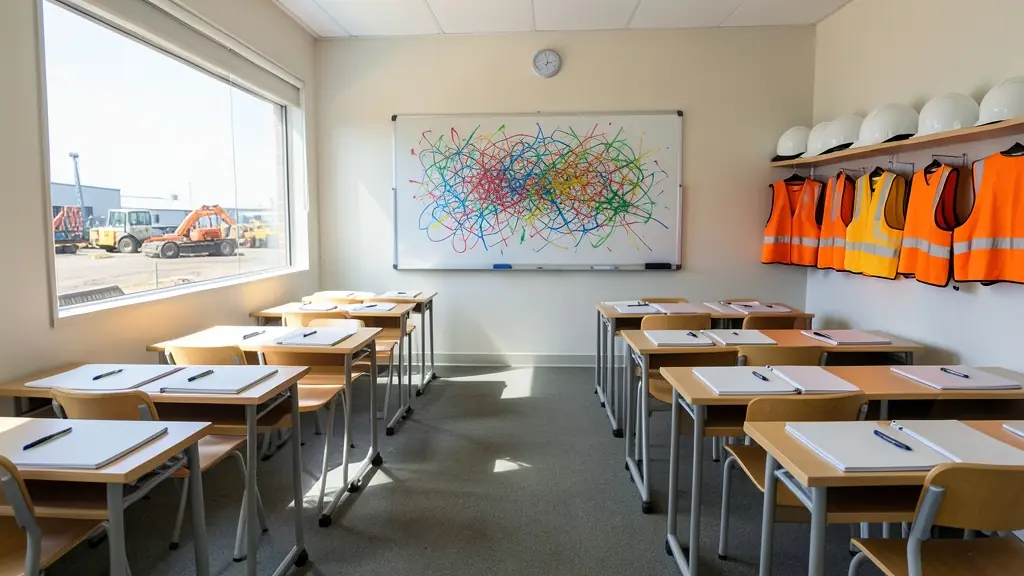
A skills development learnership combines classroom learning with work experience and leads to a registered qualification, usually over about 12 months. Employers run learnerships to build skills they cannot hire, to bring in young people and to improve their B-BBEE skills score. Most use a learnership provider to deliver the training, assess learners and handle the paperwork. Tell us the qualification, the number of learners and whether they are employees or unemployed, and we pass your request to independent providers in your area. They quote you directly, free.
How a learnership works
The learner spends part of the time in class with the provider and part at work, doing real tasks under a workplace mentor and recording them in a logbook or workbook. The employer and learner sign a learnership agreement. At the end the learner is assessed, the results are moderated and, if competent, the learner is certificated. Qualifications range from business administration and contact centre work to mining, engineering, retail and farming, each under the SETA for that sector. Ask the provider about the qualification's registration status under the QCTO, and check that your workplace can offer the tasks the qualification asks for, because the provider and the SETA may want to see that before learners start.
Employed (18.1) and unemployed (18.2) learners
An 18.1 learnership is for people you already employ, to build skills or formalise what they know. An 18.2 learnership brings in unemployed learners, often young people, for the length of the programme. Unemployed learners usually get a stipend. Both need workplace mentors with the time and the knowledge to guide them; many companies train mentors first, sometimes on the assessor course.
Tax allowance, SETA grants and B-BBEE
Employers can claim the learnership tax allowance under section 12H of the Income Tax Act; the amounts and the end date have changed over the years, so ask a tax practitioner for the current position. SETAs pay discretionary grants for learnerships when their funding windows open, and your skills development facilitator can apply and plan the learnership in your WSP. Learnerships count toward the skills development element of B-BBEE; check the details with your verification agency.
What a provider does, and what to ask
A learnership provider usually helps recruit and screen learners, delivers the classroom part, supplies learner guides and logbooks, assesses and moderates, tracks attendance and deals with the SETA. Ask each provider:
- Are you accredited for this qualification, and is it still registered?
- Who pays the stipends, and who is the learners' employer?
- What support do our mentors get?
- What happens if a learner drops out?
- How will you report progress to us each month?
Plan the intake early: recruiting, screening and signing agreements often takes longer than the training itself.
What to include in your brief
- The qualification or field
- Number of learners
- Employed (18.1) or unemployed (18.2)
- Your SETA and the work site
- Whether you want help with grants
Learnership Providers for business, government and communities
- Companies and head offices: yearly intakes of unemployed graduates and school leavers in admin, finance and IT
- Government departments and municipalities: municipal and departmental programmes for unemployed youth, often with LGSETA or PSETA
- Schools, colleges and universities: colleges hosting learners, and schools employing young people as admin learners
- NPOs, churches and community groups: NPOs placing unemployed youth in learnerships with employer partners
- Small and family businesses: a small firm hosting one or two learners with a mentor and an accredited provider
- Mines, plants, factories and farms: operator, artisan support and safety learnerships on mines, plants and farms
- Event organisers and associations: hospitality and events learnerships combining classes with work at venues
- Training and skills development providers: accredited providers running the classroom, assessment and SETA paperwork for employers
Frequently asked questions
How long does a learnership take?
Do unemployed learners get paid?
Can a small business run a learnership?
Do you run learnerships yourselves?
Learnership Providers by province and city
- Johannesburg
- Pretoria
- Centurion
- Midrand
- Sandton
- Randburg
- Roodepoort
- Krugersdorp
- Randfontein
- Germiston
- Boksburg
- Benoni
- Kempton Park
- Alberton
- Vanderbijlpark
- Vereeniging
- Durban
- Pinetown
- Pietermaritzburg
- Richards Bay
- Newcastle
- Ladysmith
- Gqeberha (Port Elizabeth)
- East London
- Kariega (Uitenhage)
- Mthatha
- Cape Town
- Bellville
- Paarl
- Stellenbosch
- George
- Worcester
- eMalahleni (Witbank)
- Middelburg
- Secunda
- Mbombela (Nelspruit)
- Rustenburg
- Brits
- Klerksdorp
- Potchefstroom
- Mahikeng
- Polokwane
- Tzaneen
- Kimberley
- Upington
- Bloemfontein
- Welkom
- Sasolburg