Understanding the role and impact of an educational workshop facilitator in schools
Key responsibilities in classroom settings
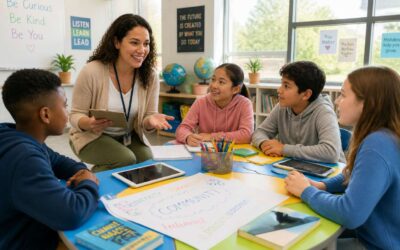
In South Africa’s classrooms, interactive workshops push learning beyond the chalkboard, boosting engagement and retention by up to 30%. As a school workshop facilitator, I see the magic when carefully designed sessions spark curiosity and confidence!
I translate the curriculum into immersive experiences, manage group dynamics, and collaborate with teachers to meet CAPS goals.
- Designs CAPS-aligned activities that invite inquiry
- Fosters inclusive participation and safe discussion
- Adapts pacing and language to diverse learners
- Assesses progress and provides actionable feedback
The result is tangible: brighter participation, sharper critical thinking, and classrooms that feel alive.
Measurable outcomes and success metrics
In South African classrooms, a school workshop facilitator turns a lesson into an expedition, where questions spark momentum and curiosity follows like a compass. Dynamic sessions have been shown to boost retention by as much as 30%, transforming quiet corners into hubs of dialogue and discovery.
Measured outcomes paint a clear map: participation skews higher, ideas evolve into reasoned arguments, and learners articulate their thinking with confidence. With careful observation, progress toward learning objectives becomes tangible and actionable feedback guides both learners and teachers.
- Engagement and participation rates
- Quality of discourse and ability to justify reasoning
- Observed progress toward curriculum goals and actionable feedback
Collaborating with teachers and administrators
Across South Africa, classrooms brighten the moment a school workshop facilitator arrives. One district reported a 28% rise in on-task behavior after a semester of interactive sessions—that’s not magic, but method. This role acts as an expedition guide, turning questions into momentum and curiosity into dialogue.
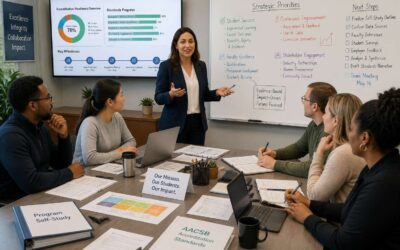
Effective collaboration with teachers and administrators is the backbone of impact. By weaving planning, assessment, and resource sharing into the timetable, the facilitator ensures activities align with curriculum goals and school priorities.
- Joint planning with teachers to tailor activities to the curriculum
- Regular briefings with administrators to align goals and assess progress
- Post-session reflections to refine methods and disseminate insights
Seen in practice, the partnership changes classroom culture: students speak more, defend ideas with evidence, and teachers regain time for targeted feedback. This collaboration reverberates beyond tests, shaping respectful dialogue and curiosity long after the bell.
Ethical considerations and inclusive practices
Across South Africa, a district-wide survey found on-task behavior up 28% after a semester of interactive sessions—a reminder that impact is method, not magic. The school workshop facilitator guides curiosity, turning questions into momentum and chalk into maps for inquiry.
Ethical considerations light the path: safeguarding, confidentiality, and informed consent are non-negotiable; inclusive practices ensure every learner participates.
- Safeguarding and confidentiality respected in interactions
- Accessible materials and universal design
- Culturally relevant content and language inclusivity
- Transparent consent with learners, families, and staff
When ethics meet inclusivity, classrooms feel warmer and sharper: students speak more, ideas gain support, and teachers reclaim time for targeted feedback—long after the final bell.
Designing engaging school workshops: structure, content, and objectives
Needs assessment and audience profiling
In South African classrooms where curiosity flickers like a lantern, a skilled facilitator can lift participation by up to 40% when sessions are designed with intent. A workshop isn’t a lecture; it’s a living map that invites learners to steer the journey through structure, content, and clear objectives.
Design hinges on three segments: structure, content, and objectives. The rhythm may unfold as follows:
- Opening that invites curiosity
- Active exploration across modalities
- Enduring takeaways aligned with curriculum
Needs assessment and audience profiling act as compass, aligning language, examples, and pacing to the South African classroom realities, supporting inclusive participation. The school workshop facilitator translates that insight into every activity, ensuring relevance and resonance for diverse learners.
Clear learning objectives and outcomes
In South African classrooms, curiosity can light a room; a well-timed nudge toward purpose boosts participation, sometimes by about 40%. A seasoned school workshop facilitator understands that learning flourishes when sessions begin with a bold question and a clear aim.
Design begins with structure—a living map that travels through inquiry, collaboration, and reflection. Start with an opening that invites curiosity, move through hands-on tasks and discussion across modalities, then close with enduring takeaways anchored to the curriculum.
- hands-on experiments
- collaborative problem-solving
- story-driven visuals
For the school workshop facilitator, content must mirror learners’ realities and the South African classroom mosaic—real examples, inclusive language, and accessible formats. Clear objectives and outcomes give direction to lessons, guiding assessment and reflection, ensuring progression and relevance for every learner.
Hands-on activities and experiential learning
A curious spark in South African classrooms can brighten a room; a bold question at the outset and a clear aim can boost participation by about 40%. A school workshop facilitator crafts sessions that pivot on purpose, guiding learners toward meaningful outcomes rather than rote tasks!
Design begins with structure—a living map weaving inquiry, collaboration, and reflection. Open with curiosity, move through hands-on tasks and cross-modal discussion, then close with enduring takeaways tied to the curriculum.
- hands-on experiments
- collaborative problem-solving
- story-driven visuals
Content must mirror learners’ realities and the South African classroom mosaic—real examples, inclusive language, and accessible formats. Clear objectives and outcomes give direction, guiding assessment and reflection, ensuring progression and relevance for every learner.
Hands-on activities and experiential learning anchor theory in lived experience, turning abstract concepts into concrete skills and confident dialogue in classrooms across the nation.
Timing, pacing, and smooth transitions
A bold opening and a precise aim can lift engagement by up to 40% in South African classrooms—a punchy hook for any session designer crafting sessions with purpose.
Design begins with a living map: a flexible structure weaving inquiry, collaboration, reflection, and clear objectives into one coherent arc. Timing, pacing, and smooth transitions keep energy high from the first question to the final takeaway.
Content should mirror learners’ realities—inclusive language, real-world examples, and visuals that spark conversation. A deft facilitator nudges dialogue, invites diverse perspectives, and lets learners grow their confidence by connecting ideas to everyday practice.
- Clear structure that guides activity blocks
- Content grounded in local South African contexts
- Intentional transitions that preserve momentum
As a school workshop facilitator, timing and structure are the best tools to turn curiosity into lasting learning.
Resource planning and accessibility
In South Africa, classrooms see up to a 40% boost in engagement when workshops unfold like a living map—clear aims, flexible pacing, and resonance with daily realities.
Design begins with a living map—an adaptive spine that threads inquiry, collaboration, reflection, and purpose into one arc. Resource planning and accessibility are the spine, not afterthoughts; budgets, materials, and delivery modes bend to diverse learners. As a school workshop facilitator, I craft spaces that feel intentional, inclusive, and bright with possibility.
- Modular blocks that adapt to timetables and learner needs.
- Accessible materials across print, digital, and multilingual formats.
- Authentic contexts and visuals that spark dialogue and reflection.
In this South African landscape, structure and content converge into an inviting space of inquiry and shared practice!
Facilitation techniques for diverse learners
Managing group dynamics and participation
Across South Africa, classrooms that adapt to diverse learning styles report up to 42% higher engagement. Dynamic spaces demand nimble rhythms. When facilitation honors every learner’s voice, participation climbs and curiosity thrives. A school workshop facilitator can turn a crowded room into a chorus of ideas, where every contribution matters and learning feels magical.
Facilitation techniques for diverse learners rely on clarity, choice, and inclusive pacing. To manage group dynamics and participation, consider:
- Structured turn-taking that invites quieter voices to surface
- Multiple formats—discussion, quick writes, and hands-on demonstrations
- Regular check-ins that read the room and re-align energy
With thoughtful design and flexible timing, the session remains safe, stimulating, and accessible to everyone—from earliest readers to curious teenagers—keeping learning adventurous rather than intimidating.
Questioning strategies that promote critical thinking
“Education is not the filling of a pail, but the lighting of a fire,” a timeless reminder that guides every school workshop facilitator. In South Africa’s diverse classrooms, questions move from rote prompts to probing possibilities, diverse learners rise together—from quick readers to curious strugglers—sharing ideas without fear and testing beliefs in a safe space.
- Open-ended prompts that invite explanation and rationale
- Structured wait time to surface quieter insights
- Probing questions that reveal assumptions and evidence
- Think-pair-share and brief reflections to capture evolving thinking
In this cadence, the school workshop facilitator balances clarity with curiosity, ensuring every learner can participate. By weaving these questioning strategies into the rhythm of the lesson, classrooms become laboratories of critical thinking and mutual respect—where ideas are tested, voices are valued, and learning feels alive. The impact of a school workshop facilitator resonates beyond the room.
Use of visuals, demonstrations, and multimedia
In South Africa’s dynamic classrooms, a simple truth anchors every session: pictures speak louder than words. A school workshop facilitator harnesses visuals, demonstrations, and multimedia to meet diverse learners where they are—without compromising complexity or curiosity.
- Visual anchors: diagrams, charts, and color-coded timelines that translate abstract ideas into tangible cues.
- Live demonstrations: tactile experiments, role-plays, and simulations that build memory through action.
- Multimedia: short clips, audio stories, and interactive apps that sustain attention and invite exploration.
Visual anchors, live demonstrations, and multimedia create cognitive bridges for quick readers, curious strugglers, and in-betweens alike. When these tools are chosen with care, the room feels alive—each learner finding a doorway into the topic, and every session guided forward by a school workshop facilitator.
Adaptations for accessibility and language needs
In South Africa, classrooms are mosaics of languages, where “Words are bridges, not barriers” becomes a working principle rather than a line in a policy book. A quiet statistic whispers that multilingual learners are the norm, demanding facilitation that meets curiosity where it is—without watering down complexity.
Facilitation techniques for diverse learners hinge on accessible language, chunked sequences, and multiple modalities. The school workshop facilitator layers explanations with visuals, short demonstrations, and purposeful pauses that invite check-ins and read non-verbal cues. Tone, pace, and scaffolds matter as much as content, turning potential fragmentation into coherence.
Adaptations for accessibility and language needs include plain-language scripts, captioned media, and materials available in home languages where possible. Beyond translation, the focus is on meaningful participation—so every learner steps forward with confidence, and curiosity remains the common thread.
Measuring impact: evaluating workshops and reporting to stakeholders
Pre- and post-workshop assessments
Impact blooms where curiosity meets evidence. In the theatre of learning, the school workshop facilitator weaves moments that linger long after the bell. Behind the numbers lie stories of growing confidence, sharper questions, and kinder collaboration. The narrative transforms data into a compass, guiding the next session to reach more learners.
To translate those moments into stakeholder-friendly pictures, several approaches help:
- Baseline and post-workshop assessments that track curiosity, problem-solving, and collaboration
- Observations of participation and group dynamics as evidence of engagement
- Project portfolios or demonstrations that showcase newly practiced skills
- Concise, visually engaging dashboards tailored for school leaders and parents
Reports travel to principals, district offices, and parents, painting a vivid portrait of progress with warmth and rigor. The school workshop facilitator nurtures progress with clarity and heart, and every line of the report adds texture to the evolving classroom tapestry in South Africa.
Feedback collection methods from students and teachers
In South Africa’s classrooms, 72% of learners say timely feedback changes how they tackle tasks. That pulse drives how a school workshop facilitator evaluates workshops and reports to stakeholders with warmth and precision. Data becomes a compass that points to what to try next.
Feedback collection methods from students and teachers help close the loop. They fuel concise, human narratives that principals, district offices, and parents can trust.
- Student surveys and quick reflections after sessions
- Teacher interviews and debriefs on group work and problem-solving
- Observations of participation and collaboration during activities
These inputs translate into dashboards and short narratives that spotlight growth, curiosity, and cooperative skills. The school workshop facilitator uses these insights to shape the next learning moment with clarity and heart.
Analyzing engagement and learning gains
In South Africa, 72% of learners say timely feedback changes how they tackle tasks. That pulse guides how a school workshop facilitator measures impact—turning data into a warm, human narrative rather than a sea of numbers.
Engagement and learning gains are analyzed with dashboards and short narratives, spotlighting growth and curiosity.
- Engagement and participation levels
- Learning gains and application in tasks
- Stakeholder-friendly narratives showing progress
These inputs inform the next learning moment with clarity and heart, ensuring reports to principals, district offices, and parents feel trustworthy and hopeful. That same lens guides the school workshop facilitator as dashboards translate engagement into action across schools.
Communicating outcomes to administrators and sponsors
In South Africa, 72% of learners say timely feedback changes how they tackle tasks, a pulse that guides a school workshop facilitator in measuring impact. Data becomes voice: dashboards that track participation and short narratives that spotlight curiosity, not charts alone.
- Clear visuals that translate numbers into growth stories.
- Concise progress notes showing how workshop ideas move into classroom tasks.
- Transparent timelines and resource use that justify investment.
Reporting to administrators and sponsors centers on trust and momentum. The school workshop facilitator crafts reports for principals, district offices, and parents that feel credible and hopeful, weaving outcomes into a human arc rather than a ledger.
Scaling and sustaining effective workshop programs
Curriculum alignment with standards and frameworks
A single well-timed workshop can ripple through a term, lifting engagement from meh to magnetic. A seasoned school workshop facilitator knows scaling isn’t merely multiplying sessions—it’s embedding durable practices that travel from grade to grade.
Curriculum alignment with standards and frameworks, especially CAPS in South Africa, anchors every activity. When activities map to mandated outcomes, feedback from teachers becomes more actionable and sponsors see tangible value. The school workshop facilitator thrives when alignment to CAPS is explicit, not an afterthought.
For sustainable expansion, these high-level levers matter:
- Standardized, reusable templates that keep quality where it should be.
- Train-the-trainer momentum that spreads capacity without burning out staff.
- Data-informed refinement that respects classroom diversity while maintaining core goals.
In the end, scale is less about numbers and more about consistency, clarity, and a touch of South African resilience!
Developing repeatable templates and checklists
Scaling is not about piling on sessions; it’s a steady beacon guiding classrooms from grade to grade. As a school workshop facilitator, I know durable practice travels through routines, not bursts of activity, turning momentary curiosity into lasting engagement across the school.
Develop repeatable templates and checklists to preserve quality as teams grow. These tools act as compass and clock, guiding facilitators, teachers, and learners toward the same outcomes.
- Lesson-planning templates
- Event setup checklists
- Post-workshop reflection forms
With train-the-trainer momentum and modular learning blocks, consistency, clarity, and a dash of South African resilience endure beyond the current term.
Professional development for facilitators
Engaged classrooms don’t emerge from impulsive bursts; they grow from sustained, scalable workshop programs. In South Africa, schools reporting continued professional development for facilitators see engagement metrics improve by up to 30% within a single term.
For the school workshop facilitator, scaling means codifying practice—turning insights into durable routines that travel from grade to grade. A lean framework accelerates consistency, with modules that teachers can pick up, apply, and reflect on. The following building blocks tailor professional development without draining time or resources:
- Mentor shadowing and peer observations as reflective practice
- Modular learning blocks and micro-credentials as flexible scaffolds
- Structured reflection cycles and a repository of reusable templates as shared language
This cadence keeps alumni networks strong, empowering the school workshop facilitator to mentor new teams year after year.
Partnerships with schools and districts
Scale happens when a quiet blueprint becomes the norm. In South Africa, districts partnering with facilitators report engagement rising by up to 30% in a single term—proof that steady, supported programs beat impulsive bursts. A focused school workshop facilitator understands partnerships with schools and districts aren’t add-ons; they’re the engine that moves practice from one grade to the next.
Partnerships with schools and districts formalize the approach and make growth repeatable.
- Co-design curricula and PD calendars with district offices
- Shared resource libraries and reusable templates
- Joint evaluation cycles and cross-campus feedback loops
Through these collaborations, accountability and sustainability are baked in. A school workshop facilitator sits at the table with principals, curriculum heads, and teacher champions, ensuring new campuses climb aboard without starting from scratch.


0 Comments