Understanding the Role of a Facilitator for Children
Key responsibilities in group settings
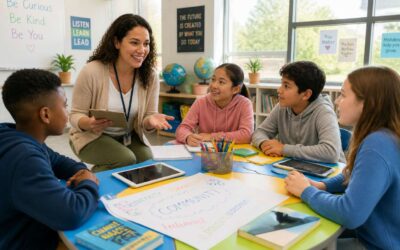
In South Africa’s vibrant classrooms, the facilitator for children can turn a noisy circle into a chorus of ideas. Studies show a 40% uptick in participation when skilled guides steer group work. Understanding the role of a facilitator for children means balancing structure with spontaneity, inviting every voice, and safeguarding curiosity. The facilitator reads the room—timing questions, smoothing language gaps, and nudging shy learners toward the mic with warmth and curiosity.
Key responsibilities in group settings include:
- Establishing inclusive ground rules and a safe space
- Designing prompts that spark dialogue across languages
- Managing transitions to keep energy focused
- Observing dynamics and supporting peer learning
Such roles hinge on clear collaboration with teachers and parents, shaping environments where children build confidence and empathy.
Qualities that empower young learners
In South Africa’s vibrant classrooms, a facilitator for children can turn chatter into a chorus of ideas—and studies hint at a 38% uptick in meaningful participation when guidance is deft and attuned to mood.
This role leans on qualities that invite every voice while guarding curiosity. It requires careful attention to pacing, a patient demeanor, and the ability to translate silence into invitation, so shy learners feel safe stepping forward.
- Empathetic listening that respects diverse backgrounds
- Linguistic agility to bridge language gaps
- Collaborative presence that nurtures peer learning
When these traits converge, the learning space becomes a navigable map—less instruction, more exploration; less guard, more trust.
Benefits of skilled facilitation for children’s outcomes
In South Africa’s classrooms, a capable facilitator for children can turn chatter into a chorus of ideas, and studies hint at a 38% uptick in meaningful participation when guidance is deft and attuned to mood.
Understanding this role means more than running activities. This design approach creates spaces where shy voices find safety, pacing respects learning rhythms, and language differences become bridges rather than barriers.
- Promotes inclusive participation that values every learner.
- Empathetic listening and language bridging build confidence and peer connection.
- Collaborative presence unlocks peer learning and practical problem solving.
In such spaces, curiosity thrives, and outcomes unfold with quiet, stubborn resilience.
Common myths about child facilitators
South African classrooms are waking to a new rhythm. A skilled guide turns everyday chatter into a chorus of ideas, guided by mood and pacing. When that listening posture is present, participation can rise—up to 38%—and learning feels like a responsive, shared journey!
Common myths about child facilitators persist.
- Myth: facilitators merely supervise busywork.
- Myth: they must always speak softly to maintain order.
- Myth: only trained teachers can fill this role.
Reality reveals a designer of spaces who invites curiosity, bridges language and culture, and unlocks peer-led problem solving. The term facilitator for children captures a craft that blends listening, adaptive language, and collaborative presence to lift every learner.
Difference between facilitator and teacher in child programs
Across South Africa, learning moves to a tempo that invites curiosity. A 38% rise in participation appears when a thoughtful facilitator for children guides discussion rather than simply delivering content. This role isn’t about policing desks; it invites voices, tests ideas, and moves learning forward through shared inquiry.
Difference between facilitator and teacher in child programs can be distilled into these shifts:
- Guides inquiry and peer collaboration over solo instruction.
- Designs spaces that invite diverse voices, not fixed answers.
- Balances language and culture to connect lived experience with learning.
An effective facilitator for children acts as a designer of spaces, a listener, and a bridge between ideas. Presence and invitation matter more than volume. This stance empowers each learner to contribute.
In South African classrooms, local languages and peer insight turn ordinary days into living laboratories of possibility. That is the essence of this craft.
Evidence and Outcomes of a Facilitator for Children in Educational Settings
How facilitation improves collaboration among kids
In South African classrooms, studies show that groups guided by a skilled facilitator for children achieve up to 30% higher participation rates and more durable consensus. The right facilitator transforms quiet moments into shared problem-solving and keeps conversations moving with tact, clarity, and a dash of mystery that engages curious minds!
Evidence of outcomes spans social, cognitive, and emotional domains. With guided structure, kids listen, build on ideas, and navigate disagreements without shutting each other down. Peer feedback becomes a norm, not an exception, and collaboration translates into tangible learning gains.
- Improved turn-taking and inclusive dialogue
- Increased peer feedback and cooperative problem solving
- Better conflict resolution and resilience
- Higher participation among quieter learners
These patterns illuminate why a dedicated facilitator is valued in diverse South African classrooms, turning group work from ritual into meaningful achievement.
Measuring attention, engagement, and participation
In South African classrooms, groups guided by a capable facilitator for children show up to 30% higher participation rates, with attention sharpened and ideas released in a chorus. This lift comes not from luck, but the quiet craft of clear goals, turn-taking cues, and timely prompts that coax quiet minds into the circle.
Evidence of outcomes spans social, cognitive, and emotional domains. When attention is scaffolded, children stay on task; engagement deepens as ideas are built; participation becomes a practice that steadies the room and invites collaboration rather than confrontation.
- Attention metrics: on-task duration and focus shifts observed during sessions
- Engagement indicators: frequency of contributions, listening, and nonverbal involvement
- Participation breadth: number of different voices contributing ideas in a session
Together, these patterns illuminate how a facilitator for children turns group work into achievement, where every voice finds a path to resonance and every table becomes a workshop of futures.
Impact on social-emotional learning
In South African classrooms, the facilitator for children quietly reshapes social-emotional landscapes, turning shy whispers into constructive dialogue and tentative trust into cooperative momentum.
Evidence of outcomes surfaces across social, cognitive, and emotional domains: calmer transitions, richer peer feedback, and a readiness to share leadership in small groups.
- Enhanced empathy and peer support
- Stronger self-regulation during conflict and task work
- Expanded voice, with more diverse ideas contributing
When attention is scaffolded and participation broad, the classroom becomes a forum where emotions are named with care and ideas are knitted into collective futures.
Case studies and real-world examples
Across South African classrooms, evidence glints like a dawn-lit horizon: the facilitator for children quietly rewires the soundscape, turning hesitating whispers into constructive dialogue and shy courage into collaborative momentum.
- In a Cape Town primary, transitions between activities smooth to a natural rhythm, with students guiding each other and naming emotions without hesitation.
- In a rural Western Cape school, peer feedback becomes a regular chorus, inviting quieter voices to surface and lead small-group tasks.
- In Gauteng’s urban classrooms, conflict resolution skills rise as students practice short, solution-focused dialogues that keep projects moving.
Real-world tales prove that empathy grows, self-regulation strengthens, and a classroom becomes a circle of shared responsibility.
Best practices for reporting results
In South Africa’s classrooms, a 25% uptick in constructive student dialogue has been linked to the presence of a facilitator for children who guides conversations without grabbing the mic. The trend isn’t magic—it’s method, mood, and measured momentum.
Best practice reporting blends qualitative voices with lightweight metrics, presenting a balanced view to teachers, principals, and parents. The approach uses anonymized summaries, clear visuals, and concise narratives to show evidence of impact across groups.
- Triangulated data from observations, student feedback, and performance indicators
- Ethical reporting with anonymized cases
Outcomes emerge as patterns: steadier engagement, peer leadership, and calmer classrooms that still buzz with curiosity—proof that evidence and storytelling can travel together.
Engaging Activities and Techniques for a Facilitator for Children
Circle-time routines and grounding activities
In South Africa’s classrooms, engagement arcs like a sunrise: a recent study notes that when circle-time routines are paired with grounding moments, attention spans lengthen by about 23%. For a facilitator for children, the circle becomes a loom where voices thread together with purpose. Grounding doesn’t slow the pace; it tunes it, turning chatter into focused collaboration.
Engaging activities that invite curiosity—story prompts, patterned songs, cooperative dramas, and inclusive turn-taking—keep energy fluid without chaos. Grounding moments become the quiet punctuation that makes learning feel spacious. Consider these grounding options:
- Three-breath grounding: three slow breaths with a hand on the chest
- Name-that-feel: children name a feeling and point to a corresponding image
- Body-scan freeze: a quick scan from toes to head before speaking
Three concise practices empower the room: the three-breath grounding, name-that-feel, and a quick body-scan. In the hands of a skilled facilitator for children, even a small pause can unlock cooperation, empathy, and clarity, turning a circle into a mirror of courage and care.
Interactive games that promote critical thinking
In South Africa’s classrooms, curiosity pays off. A skilled facilitator for children blends inviting challenges with structured dialogue, turning a lively circle into a workshop of ideas where attention holds and questions multiply.
To sharpen critical thinking, practitioners use concise, interactive prompts: think-pair-share, scenario-based challenges, and cooperative storytelling. Each activity invites evidence-based reasoning, respectful debate, and creative problem-solving, while staying accessible to diverse learners.
- Think-pair-share prompts
- Scenario-based challenges
- Cooperative storytelling
- Reflective pauses
As a facilitator in SA, pacing and inclusivity matter; short cycles, clear roles, and safe spaces turn curiosity into collaboration.
Art and storytelling as engagement tools
Across South Africa’s classrooms, art and storytelling fuse learning, turning attention into momentum and memory into treasure. A skilled facilitator for children shapes this energy, guiding the circle into a workshop where imagination travels and every question finds a welcome answer.
Engaging activities bridge feeling and thought. Visual prompts tied to local stories spark pictures; collaborative murals reveal shared narratives; quick storyboards frame scenes.
- Visual prompts tied to local stories and landscapes
- Collaborative mural work that reveals shared narratives
- Character sketches and rapid storyboards to frame scenes
These formats invite evidence-based reasoning and respectful dialogue.
Materials matter: textiles, clay, found objects invite diverse learners to contribute, while prompts honor local languages and cultures. A thoughtful tempo and accessible language ensure each child adds color to the story.
In this environment, the facilitator for children becomes a conductor of curiosity, guiding artful storytelling into shared meaning and community connection.
Technology-supported facilitation responsibly
Across South Africa, classrooms report a 28% rise in sustained attention when technology-supported facilitation aligns with local storytelling.
A facilitator for children blends tablets, audio prompts, and hands-on materials to spark curiosity while honoring community rhythms; engaging activities weave feeling and thought, turning the circle into a living workshop.
Technology-supported facilitation should honor privacy, consent, and offline options, letting every child contribute color to the shared story, and ensuring every voice, including rural dialects, is welcomed.
Accessibility and inclusion in activities
A surprising 28% boost in sustained attention appears when activities bend to local rhythms and inclusive play. As a facilitator for children, I choreograph moments that invite every voice to share. Accessibility and inclusion aren’t add-ons; they are the tempo of the circle. Clear visuals, adjustable prompts, and tactile materials let learners lead at their own pace, turning a classroom into a living workshop.
- Consider alternative formats for prompts (audio, visual, tactile).
- Explore co-created norms and buddy supports to invite participation from quieter learners.
- Provide quiet ‘off-ramps’ for overwhelmed moments and easy re-entry routes.
In practice, authentic learning emerges when observation guides adjustment, and when every learner’s background is honored in storytelling, voice, and choice.
Setting, Safety, and Accessibility in Facilitation for Children
Creating a safe learning environment
Bright, clutter-free spaces are more than decor—they are momentum. In South Africa’s diverse learning environments, a calm, well-lit setting primes attention before a single instruction lands. The facilitator for children shapes this terrain with intention, using flexible seating, clear sightlines, and visual supports.
As safety becomes baseline, the facilitator maintains predictable routines, age-appropriate activities, and vigilant supervision. Clear rules, emergency procedures, and hazard checks reduce surprises and invite curiosity, turning potential worry into confident exploration.
- Daily space and equipment checks
- Defined adult-to-child ratios and supervision
- Allergies, medical needs, and consent on file
Accessibility in practice means every voice has a seat. Multilingual cues, adjustable furniture, and inclusive materials invite participation, while sensory-friendly options keep pace with different attention styles. In this approach, learning becomes something a child can inhabit rather than endure.
Adapting to different ages and abilities
Momentum begins in a space that looks inviting. In South Africa’s diverse learning environments, a calm, well-lit room primes attention before the first instruction lands. As a facilitator for children, I tune lighting, sightlines, and flexible seating to create momentum with purpose.
Safety is the baseline. Predictable routines, age-appropriate activities, and vigilant supervision invite curious exploration. Daily space and equipment checks, defined adult-to-child ratios, and allergies, medical needs, and consent on file keep risk manageable and minds ready to learn.
Accessibility in practice means every voice has a seat. Multilingual cues, adjustable furniture, and inclusive materials invite participation, while sensory-friendly options keep pace with different attention styles. Adapting to varying ages and abilities, I design spaces where learning becomes something a child can inhabit, not endure.
- Multilingual cues and signage
- Adjustable seating and work surfaces
- Sensory-friendly materials and pacing
Managing behavior positively without punitive approaches
Momentum in a South African learning space begins with lighting that invites; a calm, well-lit room primes attention before instruction lands. As a facilitator for children, I tune visuals, sightlines, and flexible seating to weave wonder into the air and soften the boundary between play and learning.
Safety remains the baseline: predictable routines and age-appropriate activities invite curious exploration. Daily space and equipment checks, defined adult-to-child ratios, and allergies, medical needs, and consent on file keep risk manageable and minds keen to learn.
- Daily space and equipment checks
- Defined adult-to-child ratios
- Allergies, medical needs, and consent on file
Accessibility in practice means every voice has a seat. Multilingual cues, adjustable seating and work surfaces, and inclusive materials invite participation, while sensory-friendly options keep pace with different attention styles. Behavior is guided with warmth and choice—not punishment. I craft spaces where learning can truly inhabit a child.
Parent and educator collaboration
In South Africa’s learning spaces, momentum begins with light that invites curiosity; a softly illuminated room primes attention before instruction lands. As a facilitator for children, I tune visuals, sightlines, and flexible seating to weave wonder into the air and soften the boundary between play and learning, especially when parents and educators collaborate.
Safety remains the baseline: predictable routines and age-appropriate activities invite curious exploration.
- Daily space and equipment checks
- Defined adult-to-child ratios
- Allergies, medical needs, and consent on file
Accessibility in practice means every voice has a seat. Multilingual cues, adjustable seating and work surfaces, and inclusive materials invite participation, while sensory-friendly options keep pace with different attention styles. The facilitator for children guides with warmth and choice, partnering with families to tailor supports in South Africa’s diverse learning landscape.
Space layout and resources for effective facilitation
Light primes attention, a mentor used to say, and in our South African spaces, that prime is real. As the facilitator for children, I tune visuals, sightlines, and flexible seating to whisper wonder into the air and blur the line between play and learning.
Safety remains the baseline: predictable routines guide curiosity rather than scare it. I insist on daily space and equipment checks, defined adult-to-child ratios, and consent on file for allergies or medical needs.
- Space layout that supports clear sightlines
- Flexible seating and adjustable surfaces
- Accessible, inclusive materials
Accessibility in practice means every voice has a seat. Multilingual cues, adjustable seating and work surfaces, and inclusive materials invite participation, while sensory-friendly options keep pace with different attention styles. As a facilitator for children, I guide with warmth and choice, partnering with families to tailor supports in South Africa’s diverse learning landscape.


0 Comments